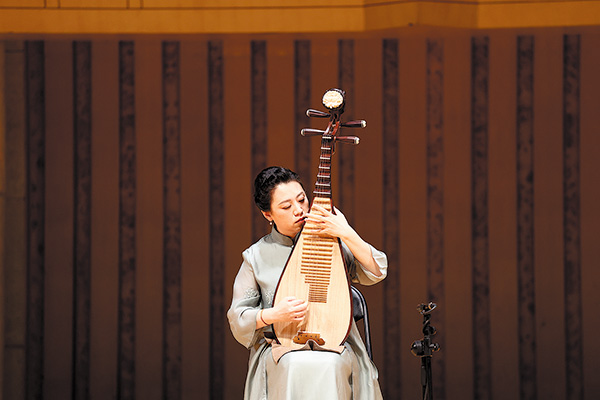
Pipa Music
Introduction
Pipa music, originating from the traditional Chinese string instrument known as the pipa, has become an integral part of Chinese musical heritage. The pipa itself is a four-stringed lute-like instrument that is plucked to produce music. It is renowned for its ability to convey a wide range of emotions through its unique tonal qualities and expressive techniques. The instrument's origins can be traced back to the Middle Eastern oud before it evolved into its present form in China.
Historical Background
The pipa has a rich history, with references dating back over two millennia. Originally from the Middle East, the instrument was introduced to China along the Silk Road. Over time, it underwent significant evolution in both structure and playing technique to adapt to Chinese musical aesthetics. Traditionally, the pipa was played in ensemble settings as well as in solo performances, often accompanying storytelling and opera.
Styles and Techniques
Four primary styles of pipa music have developed throughout Chinese history: Pinghu, Pudong, Chongming, and Wang. Each style is characterized by distinctive techniques and repertoires. The Pinghu style, although lesser-known today, is recognized for its particular aesthetic and historical significance. Efforts are currently underway to preserve this style by integrating it into academic institutions, ensuring its legacy for future generations.
Cultural Significance
Pipa music plays a vital role in cultural exchanges and the promotion of Chinese heritage globally. Events showcasing pipa performances have taken place around the world, enriching audiences’ understanding of Chinese culture. The instrument is not only a symbol of Chinese musical tradition but also a bridge connecting diverse cultures.








